
You’re sitting on your couch at home, it’s 8:00 on a Saturday night and one of your interns emails you about a new security vulnerability he just heard about on the latest and greatest podcast. You know that this new vulnerability is going to be the first thing to come up during the morning water cooler talk Monday morning. It’s time for you, the great server admin, to take flight and protect your kin!
External VPN with RDP Access - Should you do it?
Topics: Data Protection & Privacy, Healthcare, Monitoring & Detection, Advisory & CAP
Chances are that if you've used the internet in the last 15 years you've been subjected to more ads than there are grains of sand on a beach. There's also a good chance you've gotten sick of them and installed an Adblocker.
Topics: Data Protection & Privacy
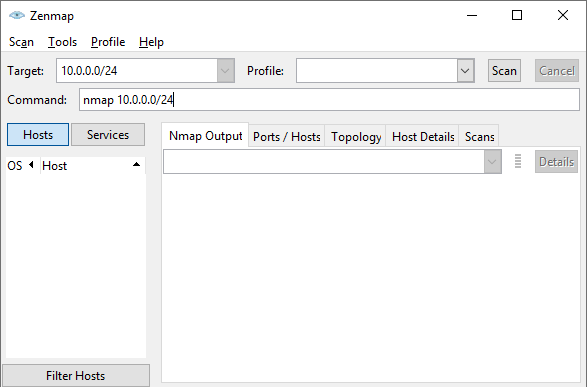
Nmap Techniques for Security and Administration
One of the most popular tools in infosec would have to be Nmap. Nmap is a Swiss Army knife of a tool when it comes to networking and is used by many more than just the infosec crowd. Network and Systems Administrators have come to rely on this tool to gather information about their environments.
Topics: Data Protection & Privacy
It’s common knowledge that websites are able to give users free content by serving advertisements and performing analytics in order to generate revenue (full disclosure: if you check this page’s source code, you’ll see Google Analytics and HubSpot). It turns out that between you and the website you’re browsing, there are a few friendly third parties who are very interested in your data. Let’s take a surface level look into how online tracking works, and how you may be uniquely identified with a few JavaScript API calls.
Topics: Data Protection & Privacy
In security, it’s often said that you will have little success within an organization if you do not have buy-in from management. However, there’s a larger group that is often-overlooked though critical to a successful security program. And they impact all aspects of your security posture. That group, of course, is the end users.